
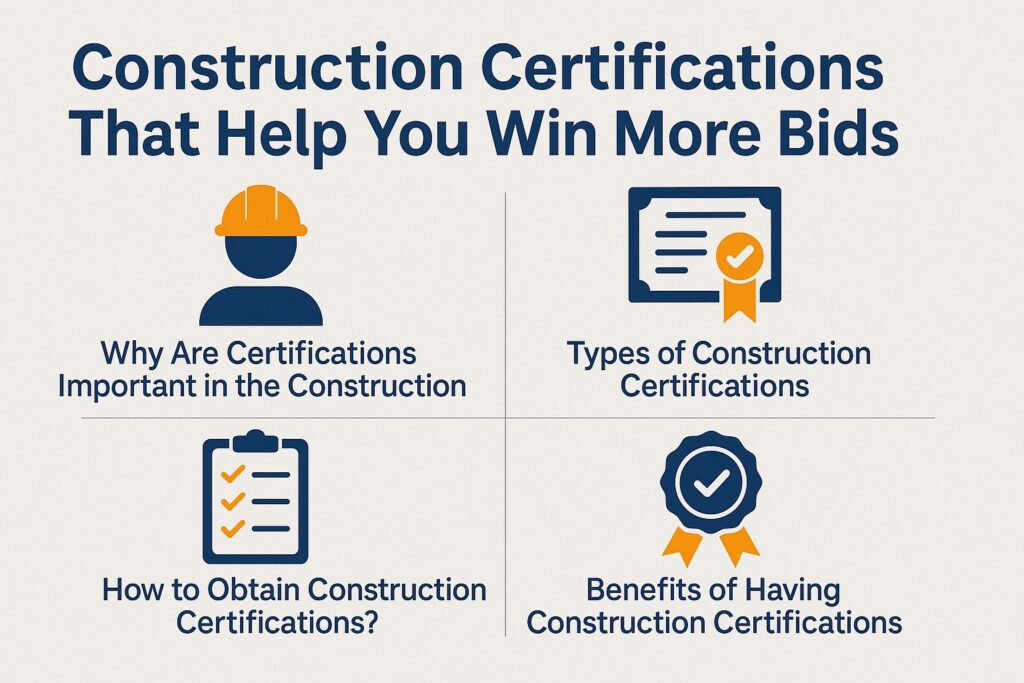
Construction Certifications That Help You Win More Bids
In the competitive world of the construction business, certifications Help professionals stand out and improve their chances for career advancement.
This article explores the importance of certifications, from Occupational Safety and Health Administration (OSHA) to specialized trade certifications.
We will guide you through the various types available, how to obtain them, and the significant benefits they bring, including increased job opportunities and improved safety practices.
Discover how these credentials can help you win more bids and improve your professional standing in construction.
Why Are Certifications Important in the Construction Industry?
Certifications matter in construction because they build trust, prove that industry standards are met, and show contractors have the skills to handle projects safely and well, adhering to building codes and safety standards.
For construction workers, obtaining the right certifications can improve your reputation, develop your leadership abilities, and demonstrate your dedication to quality assurance and safety.
Certifications like OSHA certification, LEED accreditation, and various specialized training programs give you an edge, affecting bid proposals, client relations, and the successful completion of projects.
Knowing the importance of these certifications can have a big impact on your career, project feasibility, and business growth.
Types of Construction Certifications
There are several construction certifications that focus on different areas of the industry, ensuring professionals have the necessary skills and information to manage projects effectively.
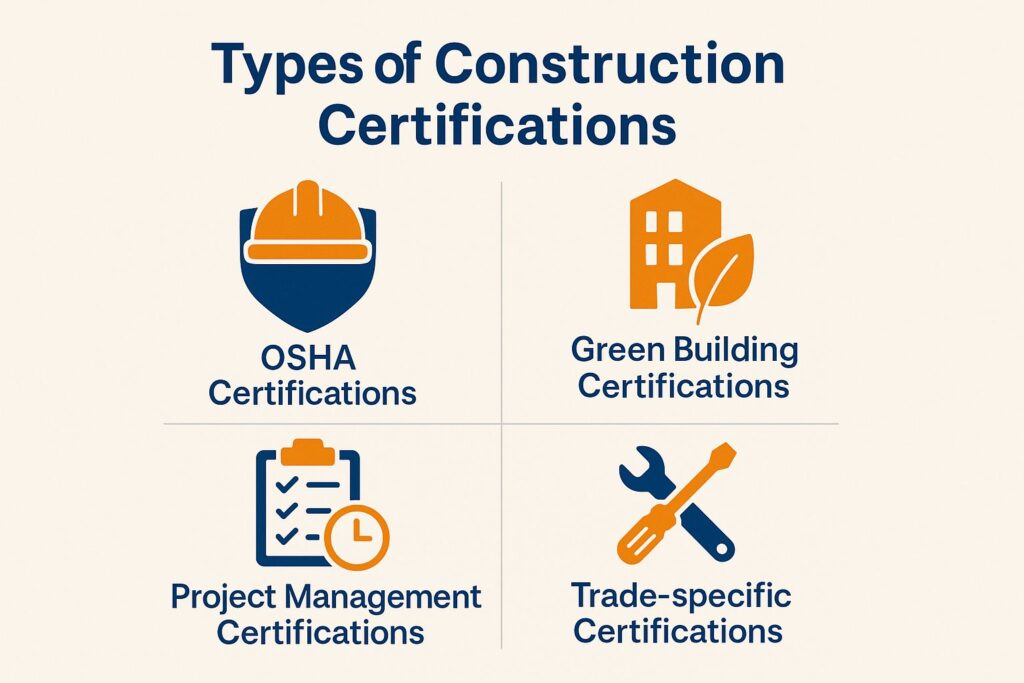
Important certifications include:
- The Occupational Safety and Health Administration (OSHA) certifications, which focus on safety practices;
- Green Building Certifications, which emphasize energy efficiency and sustainable building practices;
- Project Management Certifications for handling project timelines and resources;
- Trade-specific Certifications that confirm technical abilities in particular construction trades.
1. Occupational Safety and Health Administration (OSHA) Certifications
The Occupational Safety and Health Administration (OSHA) certification is a critical credential for construction professionals, focusing on ensuring safety standards and regulations are met on job sites. Getting OSHA certification helps people learn about the importance of workplace safety, identifying hazards, and following federal rules, which improves project management and keeps workers safe.
This certification is important for reducing accidents at work, which can cause expensive injuries or even deaths.
There are various levels of OSHA training, ranging from 10-hour and 30-hour courses to specialized programs catering to specific industries, each designed to equip workers and supervisors with essential safety knowledge.
For contractors, having OSHA certification can significantly influence bidding processes, as many clients favor firms that demonstrate a commitment to safety. This results in happier clients and strengthens the industry’s trust, leading to lasting business achievements.
2. Green Building Certifications
Green Building Certifications, such as LEED accreditation, play an essential role in promoting sustainable construction practices that prioritize energy efficiency and environmental stewardship. These certifications guide construction professionals in implementing strategies that minimize the environmental impact of their projects while enhancing overall client satisfaction and marketability.
Plus LEED, there are various other certifications like BREEAM, Green Globes, and the Living Building Challenge, each with distinct criteria that focus on different aspects of sustainability.
For instance, LEED looks at things like water use, sustainable site development, and indoor air quality to make sure buildings are both environmentally friendly and comfortable to live in.
Obtaining these certifications often leads to significant cost savings over time, improved project specifications, and an increased likelihood of meeting diverse client requirements.
As environmental impact assessments become more common in the industry, construction projects must follow these guidelines to help create a healthier planet and promote long-term sustainability.
3. Project Management Certifications
Project Management Certifications are important for construction workers who want to improve their project management skills, make sure projects are planned well, and complete tasks successfully. These certifications equip individuals with the knowledge to oversee complex construction projects, manage teams, and maintain timelines while adhering to industry standards.
Among the most recognized credentials is the Project Management Professional (PMP) certification, which is widely regarded as a gold standard in the field. This certification proves a professional’s skills and gives clients and stakeholders trust in how projects are handled.
Obtaining such certifications can lead to improved time management capabilities, ensuring that projects adhere to tight deadlines and budgets. The organized information given in these programs helps contractors use resources wisely, reduce waste, and improve the completion of construction projects, building a reputation for dependability in a market that is getting more competitive.
4. Trade-specific Certifications
Trade-specific Certifications validate the technical skills and qualifications of professionals in various construction trades, ensuring they are equipped to meet the demands of their specific roles. Whether you work as a carpenter, electrician, or plumber, having the right certifications improves your skills and makes you more attractive to employers in the construction field.
These certifications cover various areas, such as masonry, HVAC, and welding, showing the different trade skills and technical knowledge needed in construction.
Apprenticeship programs are important because they allow people to get real-world practice while also getting formal education to earn these certifications. This useful method enhances abilities and supports training a new team of capable workers.
These specialists improve contractor abilities and uphold firm industry standards, making sure construction projects are safe, reliable, and of high quality.
How to Obtain Construction Certifications?
To get certified in construction, start by identifying the certifications relevant to your region. Learn what qualifications are needed, including contractor licensing rules and opportunities to connect with others in the industry.
Usually, this means signing up for training, studying for the test, and passing it. Doing so improves your skills and job opportunities in construction.
1. Identify the Relevant Certifications for Your Field
The first step in getting construction certifications is finding the ones that match your field and career goals, considering current industry trends and needs. This helps you match your skills with what employers want, improving your career growth.
To successfully go through this process, people aiming to enter the field should spend time learning about industry standards from reliable sources like regulatory organizations, online sites, and professional publications.
Staying informed about emerging technologies and shifts in construction practices can also make a significant difference, especially in areas like construction technology and digital construction.
Connecting with others in your field by attending networking events, seminars, and joining trade associations gives you information about important certifications and helps build relationships that might lead to mentorship opportunities and job referrals.
Being part of these communities helps you stay informed about changes in the construction industry, making it simpler to keep your skills current and improve them.
2. Meet the Eligibility Requirements
Each certification has specific requirements that candidates must fulfill to demonstrate they have the necessary skills and experience before taking the exam. Knowing these requirements is essential for successful credentialing in the construction industry.
Typically, prospective candidates may need to demonstrate a certain level of educational background, such as a degree in construction management, engineering, or a related field, and show involvement in accredited programs.
Having work experience is usually necessary because many certifications need years of hands-on experience in construction, showing why ongoing learning and professional qualifications matter.
Some certifications even stipulate that prior credentials be held in related areas, affirming a candidate’s commitment to ongoing professional development and skill assessment.
Meeting these requirements strengthens contractor qualifications and improves industry standards, ensuring that practitioners are ready to manage the difficulties of today’s construction projects.
3. Prepare for the Exam
Getting ready for the certification exam is an important part of achieving certification. It means joining training sessions and effectively using educational resources. This preparation reinforces technical skills and knowledge essential for success in the construction industry.
Candidates should use different resources available both online and offline, such as textbooks, tutorials, and instructional videos that cover specific subjects related to their chosen certifications, including learning about construction risk assessment and managing finances.
Joining study groups can be very helpful, as talking about topics with classmates often makes difficult ideas clearer and offers various viewpoints.
Including practice exams in study sessions helps people get used to the exam format and increases their confidence by mimicking the test setting.
By using these methods to study for exams, candidates can significantly increase their readiness and improve their chances of passing on the first attempt. Proper preparation is a key aspect of Construction Certifications.
4. Take the Exam
The last step in getting construction certifications is passing the certification exam. Candidates need to sign up and pick a testing location that matches the exam style. Depending on the certification, exams may be computer-based or written, and it’s important to familiarize yourself with the testing environment beforehand.
This preparation is important because it builds confidence and makes the exam process easier.
On exam day, candidates should arrive early with necessary materials, including identification and any required documentation.
To ease test anxiety, adopting relaxation techniques such as deep breathing or visualization can be beneficial.
Successfully passing this exam is important; it confirms knowledge and abilities and improves one’s professional reputation, opening doors for career growth in the highly competitive construction industry.
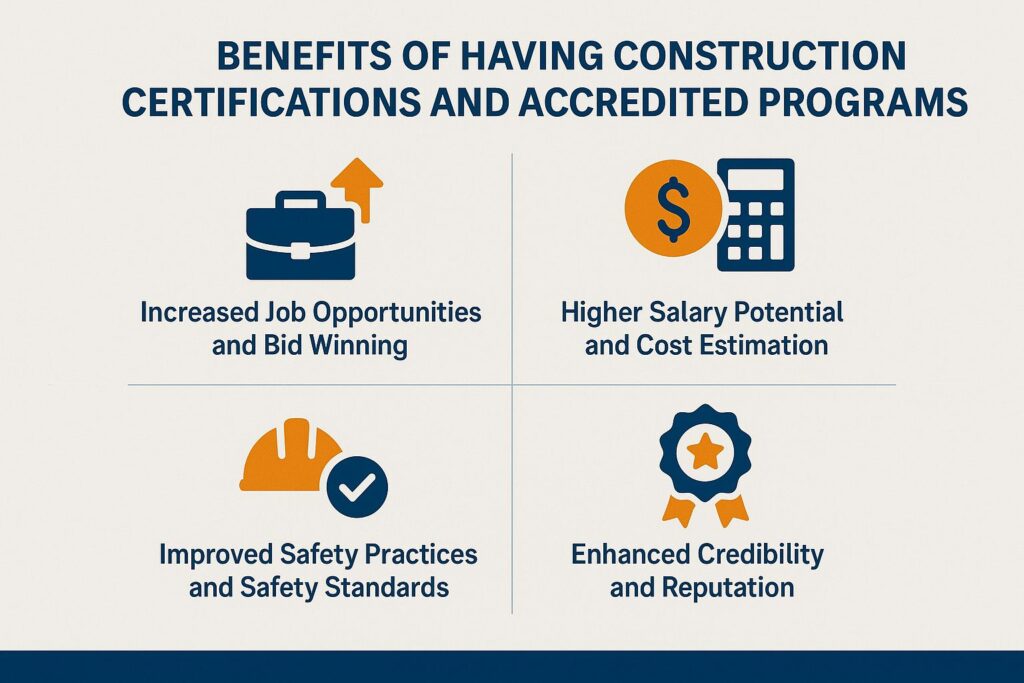
Benefits of Having Construction Certifications and Accredited Programs
Getting Construction Certifications offers many benefits that can significantly improve your career opportunities and Professional Credentials in the field.
These certifications can lead to more job openings, result in higher pay, and increase your credibility with clients and employers. They also give you an advantage in the contractor bidding process by showing your commitment to quality and industry standards.
1. Increased Job Opportunities and Bid Winning
One of the primary benefits of obtaining construction certifications is the increased job opportunities they provide, as many employers prioritize certified professionals during the hiring process. In a competitive job market, certifications can set you apart and improve your chances of success in the contractor bidding process.
As the construction industry changes, there is a growing need for workers with proper certifications. Recent market analysis shows that employers are looking for people who have current knowledge and skills relevant to industry standards.
Certifications confirm skills and show a dedication to improving professionally, which makes candidates more appealing to employers. As construction projects grow in difficulty and are subject to more rules, having certifications can greatly improve a professional’s chances of getting a job. This can open up various career opportunities in areas like project management, safety rules, and specific trades.
2. Higher Salary Potential and Cost Estimation
Research indicates that construction workers with proper qualifications tend to earn higher wages than those without, making it a wise career decision. This higher salary shows your improved contractor skills and your dedication to growing professionally.
A study by the National Center for Construction Education and Research found that certified individuals can earn up to 20% more than those lacking formal credentials. This gap in earnings highlights the importance of ongoing education in the construction field.
Using good Financial Management strategies, like setting a budget for ongoing education and investing in important tools, can improve a professional’s financial situation, aiding in Construction Analytics.
By concentrating on important decisions, construction workers can earn more now and have better job prospects later, while enhancing their skills in writing proposals.
3. Improved Safety Practices and Safety Standards
Obtaining safety certifications, including OSHA certification, contributes to improved safety practices on job sites, which is paramount in the construction industry. These certifications equip professionals with the knowledge to identify hazards, manage risks, and implement safety protocols effectively.
This basic knowledge protects employees and creates a focus on safety in workplaces, ensuring Regulatory Compliance.
By focusing on safety, companies can greatly lower the chance of accidents, resulting in fewer project delays and increased Client Satisfaction.
When teams are confident in their safety measures, they can focus on completing projects on time and within budget, utilizing Construction Management Software.
Clients are becoming more selective, often preferring contractors who prioritize safety. They see these certifications as essential for the contractor’s reputation and trustworthiness in the competitive construction industry.
4. Build Trust and Reputation with Certified Programs
Getting the proper certifications increases trust and helps establish a strong reputation in the construction industry. Certified professionals are often seen as more dependable and capable, which can increase your chances of finding work and satisfying clients.
This perception can lead to repeat business, as satisfied clients are more likely to recommend certified experts to others, enhancing Subcontractor Management.
Earning certifications like the Project Management Professional (PMP) or National Institute for Certification in Engineering Technologies (NICET) demonstrates skill and commitment to quality and safety, supporting Industry Associations.
When these professionals finish projects that clients are very happy with, they build a steady group of repeat clients and develop lasting partnerships. These connections can lead to profitable projects later on.
The link between certifications and reputation supports long-term business growth and the success of projects, influencing Construction Quality Assurance.
About the Author
My name is Mark Redding, and I’m a writer and editor for Georgia Used Construction Trailers. I’m also the owner of Redding Modular Solutions, a successful mobile office and storage trailer company based in Savannah, Georgia. For the past 16 years, I’ve helped contractors, builders, and project managers across the Southeast find affordable, flexible solutions for on-site operations. With a background in construction logistics and field operations management, I specialize in guiding businesses toward cost-effective temporary space that supports efficiency and growth.